Showing posts with label foraging. Show all posts

6.03.2016

Serviceberry and Wildflower Cake Bars - June's Delight


 I made these in honor of the Irises I smelled last week that smelled just like pound cake!  They were growing in a landscape client's garden, so I couldn't harvest them for cooking.  But I've come up with another option that I think will suit just fine - a blend of fresh wildflowers that are blooming at the moment:  
Honeysuckle, Elder, and Rose.  

Eating flowers serves to soothe the soul three times:  first, when you harvest in the sun with the pollinators flitting about, harvesting along with you, then when you are enchanted with the exquisite taste, and last once you digest and incorporate these fleeting floral gems of medicine into your body make-up.


...and native Serviceberries (Juneberries) are also ripening. 

I only have a little bit of Wild Rose to use, the native Rosa virginiana, because I don't want to take all or even a quarter of the flowers from my two small patches.  So, I have substituted a Rose I have trellised on the art studio.  The invasive Multiflora Rose would also be a great one to use, but it just finished blooming here.  You can use any fragrant Rose.

Notice the large spider bottom middle left of rock.  :)


The mixed batter before folding in the wild goodness.

Preheat oven 350.
Mix:
2 c. flour (I used sprouted Red Fife, a type of heirloom wheat, but use whatever you want).
1/2 tspn. salt
1 tspn. baking powder

Then add to the above:
1/2 c. hemp seeds
1 c. finely chopped cashews (measure before chopping, practically make a powder)


A *local* Super food! - and that really makes it Super!

I wish you could scratch and sniff this.  Sweet, heady, powerful, yet gentle.

In a separate bowl mix:
1 c. sugar (organic raw cane is ideal, I try to use organic everything all the time - not only is it healthy, but it supports farming that supports life:  the bees, the water, the air, us...).
3 Tbspn. butter/ghee/or a mild oil like avocado or walnut
2 eggs (please get yours from happy chickens, not from a factory)
1/2 c. hemp milk

Be sure to chop or cut the flowers into smaller pieces.


Then mix the dry ingredients into the wet.  Once mixed well, fold into it the flowers and berries.  You can substitute any other edible flowers or berries you wish.  This is what I used:
2 c. Elder flowers, Honeysuckle flowers, and Rose petals (about equal parts each)
1 c. Serviceberries

Looks like Magic?  It is.


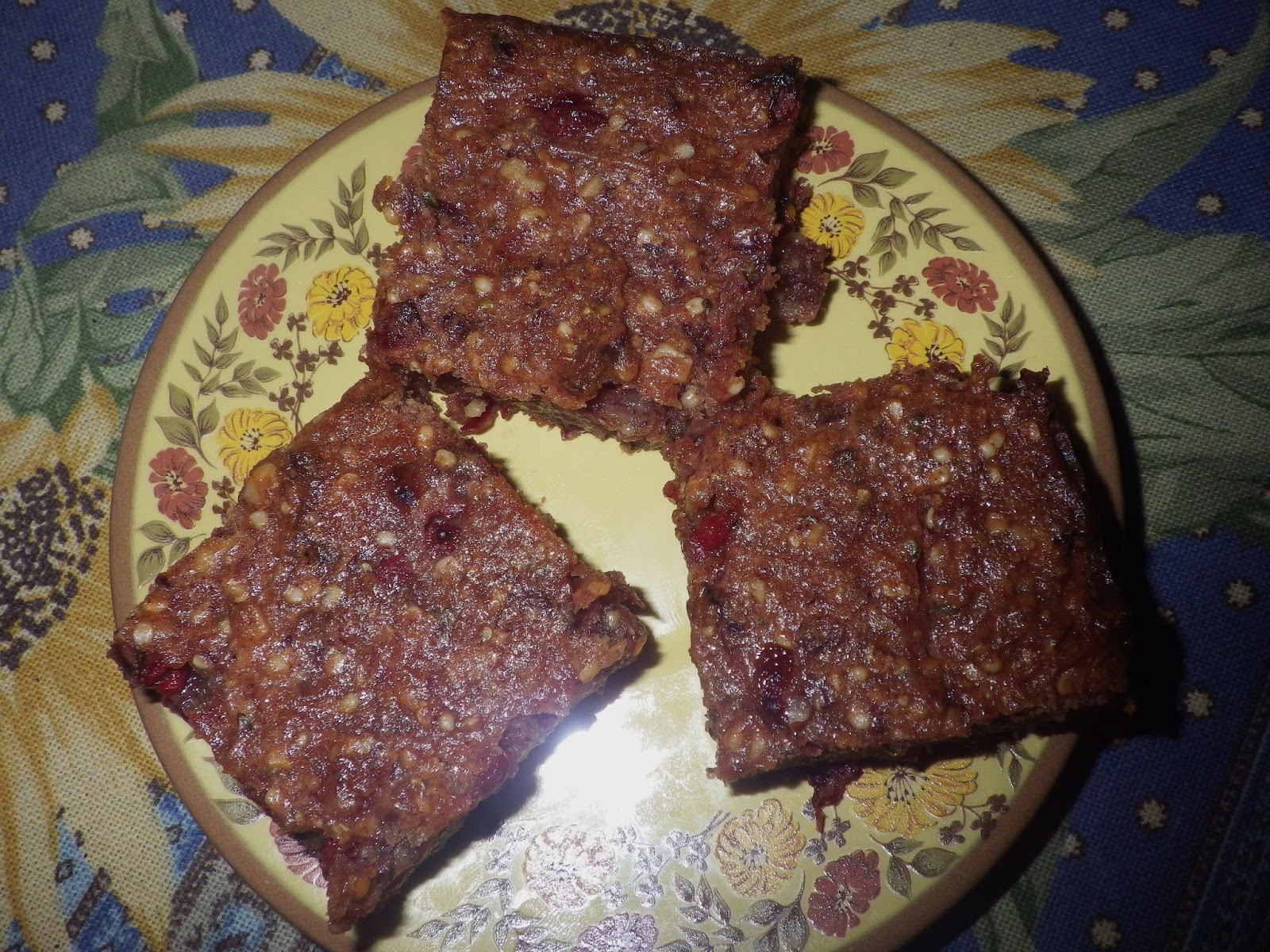
Do not over mix, pour into greased baking dish (about 9" x 13"), spread evenly to sides.  Bake for 30 minutes.  Allow to cool - if you can wait - and cut into squares.   Makes about 24 cake bars.

Then Bliss Out.  These flowers are cooling and relaxing - perfect for June's heat and activity.  Enjoy one, or two, while watching the clouds roll by...

Nom nom.  Late Spring in edible form.

“In every grain of wheat there lies hidden the soul of a star.” - Arthur Machen 'The Great God Pan.'


A catbird was harvesting those just out of my reach; I'm happy to share - they need to eat too.  You have to get to these coveted berries quick; like many of the wild delectables, they don't linger long.


4.07.2016

Breaking Fast with Some of Spring's Edible Wild Flowers


I took a walk this morning and gathered some wild edibles from the yard for a breakfast omelette.  I made some art while walking in the rain-wet wild, or should I say soothed my soul...


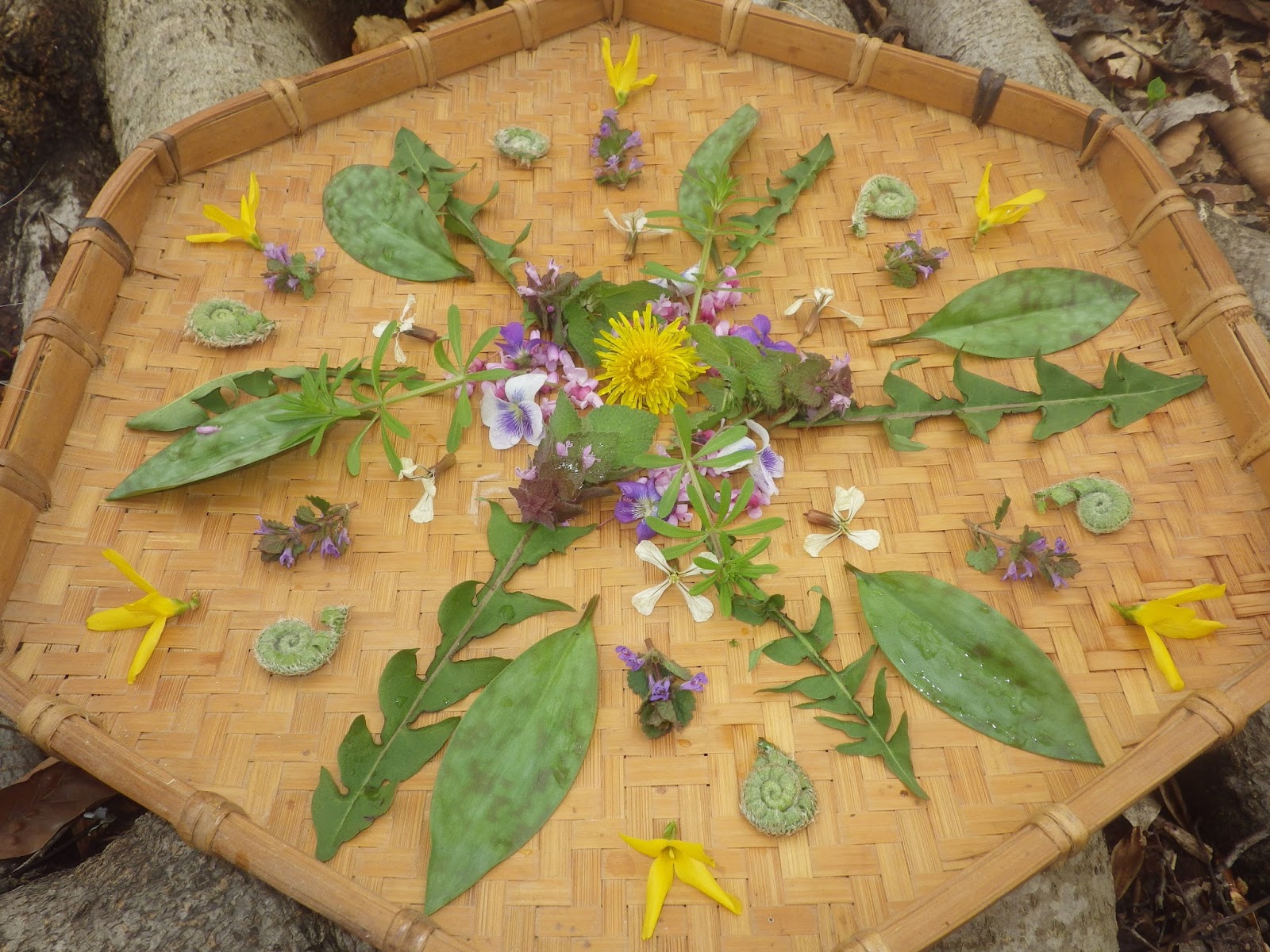
In this mandala, you will find mostly wild plants, one feral (Arugula flower), one horticultural (Forsythia flower).  The wildflowers are Ground Ivy, Purple Dead Nettle, 2 types of Violets, Dandelion, and Redbud.  The wildleaves are Cleavers, Dandelion, and Trout Lily with the spirals of fern fronds just beginning. 

Can you recognize them all?  If not, time to get out the field guides and go into the field, learn a plant a week...or a month and in a few years you will have a repertoire.   Make sure that part of your learning includes learning about the habitat and ecosystem you find the plants in and their role including whether they are invasive, rare, slow-growing, endangered, native, common, tenacious, etc.  You want to know *if* you should harvest and *how* to harvest if you do.  You'll want to know if there are poisonous look-alikes and how to tell them apart.  You'll want to know if you can only eat certain parts of the plant, or only eat it in certain seasons.  You'll want to know if the plant is an annual, biennial, or perennial as this affects harvesting guidelines.  You'll want to know if it has medicinal qualities and what they are, and so on...  Truly learn and study the plant before harvesting and eating a wild plant.


"The traveler has to knock at every alien door to come to his own, and one has to wander through all the outer worlds to reach the innermost shrine at the end." 
 - Rabindranath Tagore


I chopped up the bigger pieces and added some Garlic Mustard, see picture below.  This is one plant that you can freely harvest anytime and should actually pull it up by its roots and dispose of the roots in the trash if you do not eat them, not the compost.  It is one of the worst invasives that no amount of purposeful eradication seems to work, so you can't get rid of it even if you try, and I have tried for many years on my property as it crowds out natives and other less tenacious plants.  I still always have it, lots of it.  So harvest away.


I then mixed this with good eggs (good meaning not out of a battery cage like most eggs bought and sold) and cooked it in local lard from happy pigs and put this on sprouted, whole-grain bread with extra virgin olive oil and salt.  All organic, all ways.  Here's why.


It tastes fresh, green, vibrant, and alive! just like spring itself - a perfect way to start the day.                      
Plus you get to eat spirals.  :)


 “The moment one definitely commits oneself, then providence moves too. All sorts of things occur to help one that would never otherwise have occurred. A whole stream of events issues from the decision, raising in one’s favor all manner of unforeseen incidents and meetings and material assistance, which no man could have dreamed would have come his way.” – Goethe


2.01.2016

Uplifting! Rose Vanilla Sesame Cookies


Your tastebuds will dance a jig!


These cookies are chewy and crispy at the same time.  A delight for the mouth!


And using this quantity of real Roses makes them medicinal! 


Rose is cooling, assists with digestion including lessening gut inflammation and creating a healthy gut mircrobiome (anti-infective), supports good mood by addressing Liver stagnation, and as such is used for insomnia, frustration, depression, resentment, and fatigue.  In TCM, we'd say Rose, Mei Gui Hua, moves Qi and harmonizes Blood.  It can be useful for menstrual complaints.


Grind dried Roses until powdered.  You can use a coffee bean grinder.


Ingredients and Directions:
1 2/3c. flour
(you can use and mix various flours, I like these to use sprouted whole grain flours because they are better for you and also quinoa as it is a complete protein)
1/3 c. powdered Rose petals or buds
mix above in separate bowl with 1 tspn. baking powder

In another bowl mix:
2c. sugar
1/2c. coconut oil, melted/soft
1-2 tspn. vanilla extract (amt. depends on how strong you want the vanilla)
1c. sesame tahini, well mixed first
2 eggs

Blend together, place on greased baking sheet by the teaspoon scoop
Bake 350 degrees . 8-12 min. (less time for chewier, more for crispier)


Makes about 80 cookies; this is 8 minutes cooking for chewier.

This is 12 minutes cooking for crispier.


These cookies will delight your senses, first when you bake them and smell them, then when you eat them, and lastly when Rose works her magic!


You can harvest your own Roses for this; just make sure they are chemical-free!
These can be wild-grown or from your organic garden.


12.28.2015

Digging Medicinal Roots - Yellow Dock


These roots can be decocted fresh, or cut and dried for later decocting.

Here in the mountains of Virginia we've had unusually warm weather and are beyond two months past our usual killing frost date without having had one.  This has given us a long season in which to harvest roots, whether for medicine or food, because not only is the ground far from freezing, but it's actually been warm enough that the top growth of many plants is still happening (this helps for identification and locating).


Note the paper sheath that surrounds the petiole, or leaf stem, and how each individual leaf arises from the ground.

One plant whose roots I've harvested this fall, is Yellow Dock, Rumex spp.; if you have a garden, or a plot of un-manicured land with some sunlight and moisture, it's likely you have Yellow Dock.  It's a tenacious weed whose roots are medicinal (what we'll mainly be discussing today) and it's leaves and seeds are edible.  Harvesting this root was actually a case of "killing two birds with one stone" as it needed to be weeded out of some of the garden area anyway.  I totally dig this efficiency.  :)

The leaves are best eaten when fresh and young in early Spring, but with a warm, late fall like the one we've had,        there is often a second flush of fresh, young leaves.  These pictured here are getting to be mature, but still edible.

    Note that the leaves contain Oxalic acid, like many of our store-bought vegetables, so cooking in water and then pouring it off is ideal.


Here it is with the prior seasons seed stalk - a great identifying feature.
Seed stalk up close.

Just run your hands up the stalks to collect the edible seeds


Yellow Dock root is an alterative; it's cooling, astringent, and bitter (leaves sour) so it's good for Damp Heat conditions and as such has traditionally been used for stimulating digestion, blood cleansing, constipation, food stagnation, wet/red eczema, nervous dyspepsia, liver detoxification, lymph congestion, jaundice, sore throat, fatigue, ovarian cysts, gout, tumors, and chronic skin conditions.  It is also good for anemia as it helps the body to better utilize Iron (combine with Iron rich foods or herbs).


Roots scrubbed and ready to slice.  I "slice" them with pruners though one could use a knife.


After a couple days of drying by the wood stove, still a few more to go before jarring.


11.10.2015

Medicinal Pastry! with Quince, Apple, Warming Spices and other Fruits


Can you say "Bliss"?

This dessert definitely counts as culinary magic.  It begins with the scent of Quince, which I find truly rapturous; it is best described as floral, sweet, and tart.  But, the description does not do it justice.  Do find some and see for yourself.  I gleaned these and the apples from the landscape; both just falling to the ground unused by the property owners (a benefit of landscaping for a living) - and we couldn't let this goodness go to waste could we?  'Course the wild animals were sure to indulge too; every apple was taken by someone before the leaves fell from the tree.  :)
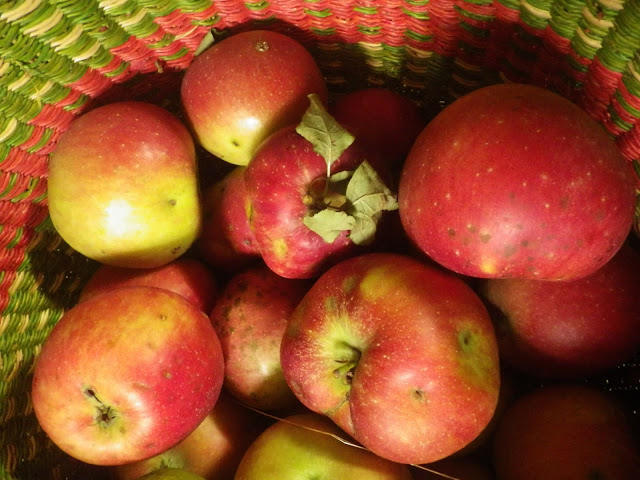
The perfection of imperfect fruit.


Back to the scent of ripe Quince...  it is one of my favorite scents in all the world.  I have the scraps sitting in a pot of water on the woodstove to extract every last bit of their olfactory goodness.  It's so good I could just sit and smell the fruit for an hour; it's actually hard to stop smelling it.  I am in bliss with the scent wafting through the house as I fix this dessert.  THIS is what artificial air fresheners attempt to duplicate (but fail).  Nothing like the real thing!  Same could be said for clothing drying on the line and getting rained on and having to stay longer outside to dry.  THAT is the *real* "rain fresh" scent - and it. is. divine.  But I digress...


Quince:  the fruit with the addictive scent.  You can forage these seasonal delights in the landscape, grow them yourself, or occasionally find them at specialty stores or farmer's markets.  Ripe in early Fall.


To make this scrumptious dessert, first make Quince jam and pastry dough.  These two items can be made a day ahead of time (or more for the Quince) if desired.

There are lots of recipes for pastry dough online, so I won't repeat one here.  I used this one and quadrupled it.  Another option would be to only double the pastry dough recipe and then half the apple filling recipe below.  I like to make large amounts of things when I cook and bake because I love leftovers and I figure once you have everything out, it's much more efficient to make large amounts.  You can always freeze some for later if you won't eat it all soon - or gift some! 


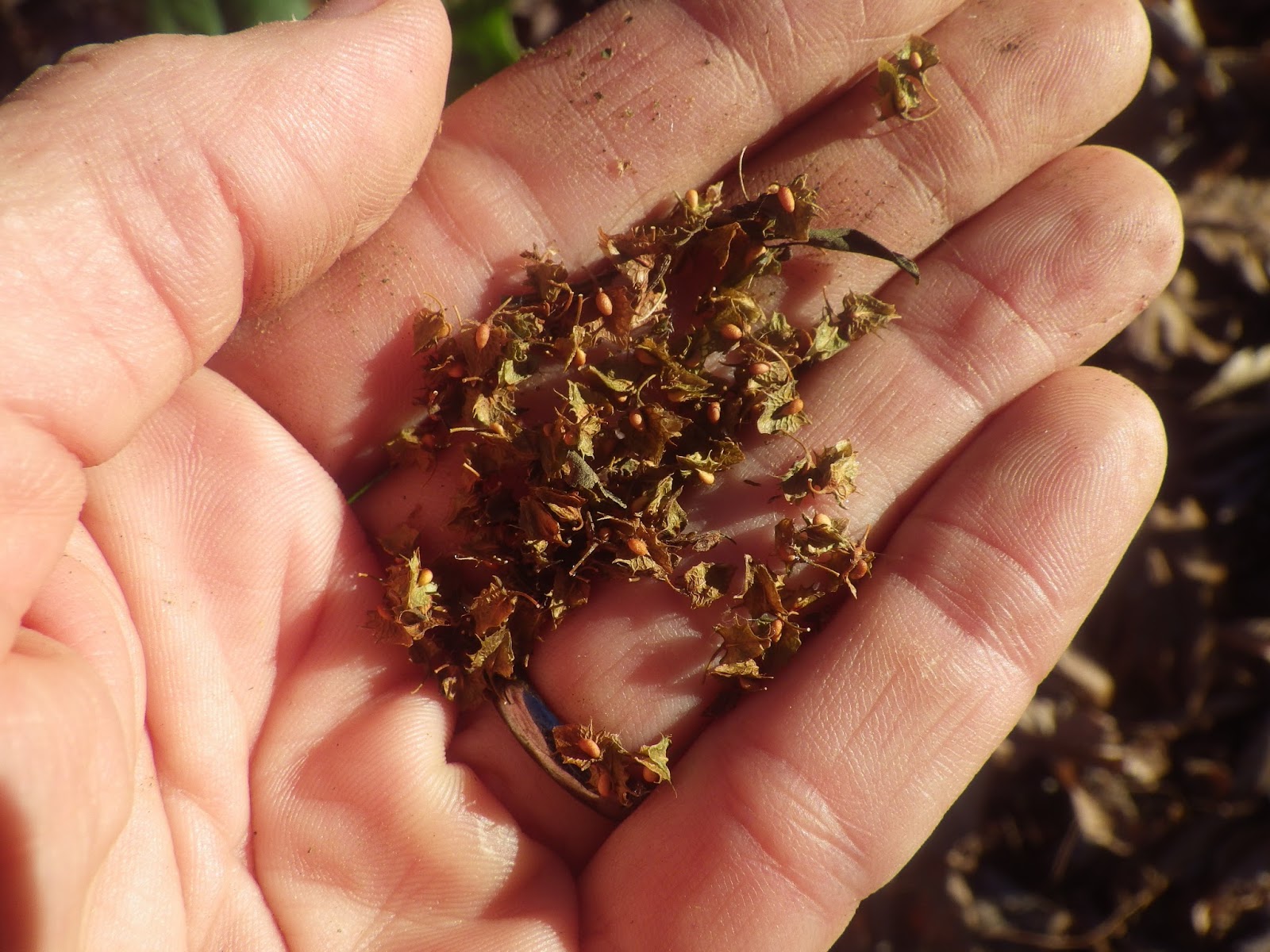
Herbal Magic Brewing:  note the tiny Vanilla Orchid seeds.


To make Quince jam:
Use about 8-12 Quince depending on size; about 3/4 c. brown sugar; one Vanilla bean pod, split open; and about 7 cups of water.  Scrub, peel, and de-core the Quince, slice and mix with other items in a pot and bring to a boil.  Keep the lid on to keep the volatile oils inside, and hence in your dessert, or leave it off to release more to the house.  It's a tough decision.  I left mine off.  Turn down to simmer for about two hours then strain out the Quince puree while it's still hot.  Quince is high in pectin naturally, so it will set up as it cools.

You can keep it simple as Vanilla and Quince alone are delightful, or add some additional spices and fruits for health and flavor.  I used 8 Clove buds, 3 Cardamom pods, 8 Jujube dates, and 16 Longan berries.  Some other great additions would be Goldenberries, Mulberries, Goji berries, Ginger, ...  We will use Nutmeg and Cinnamon in with the Apples later, but you could add more here too.


Besides the sheer delight in the smell of the Quince and spices brewing, and then the pastry baking - we know what that does for the mood!, and emotions affect the body (and vice versa) - this pastry warms the middle, or to put it another way, supports digestion.  This is especially important this time of year as the seasons turn colder or more Yin.  We need to keep our Yang digestive fires going until the Yang of Spring arrives.  See the links above on each of the fruits and spices for more information on their medicinal qualities.  You will see they can help with warming up cold joints and extremities too, amongst other things...


Once you have your Quince jam and pastry dough made, it's time to make the Apple Pastry itself...
Start by grating about 8 Apples.  I used foraged apples so there was rot and other areas I discarded, so I ended up using about a dozen apples to equal 8. 
Preheat the oven 400 degrees.


I like to leave the skins on, even with the "blemishes" that feral fruit will have.  It's good for you!


Mix your grated apple with :
1 1/2 c. Quince jam (or substitute any jam if you wish) - this is about half what we made earlier
1 c. brown sugar
1 c. raisins
2 eggs
1 Tbspn. Cinnamon
1/2 tspn. Nutmeg 
You could also add a cup of chopped nuts; Walnuts or Pecans would be great.
(This apple filling recipe will make enough filling for 4 of the pastry dough recipes linked above.)


I ended up not using any milk, but I did throw in half a jar of Hawthorn extract.  Mix it up! 


Take your dough out of the fridge and roll it out on a floured surface, cover it with filling and roll up into a log.  Be sure to leave the outer edge uncovered so you can get your dough to adhere to itself.  I made mine into one super large roll but it was hard to deal with so would recommend halfing our quartering the dough and making several.  Next time that is what I'll do.  ;)  Other options would be to just do a tart (not roll it up), or to make individual serving pastries...


Bake for 60 mins. if you make one large roll; if you do 2 rolls or 4 rolls instead; it will take much less time.  I'd say around 30-45 minutes; bake it until it is well browned.  A tart would probably only take 30 min. and individual pastries might only take 20-30 min. 
One thing about 'kitchen alchemy rules' is that there are no rules! 

You will notice I often say "about" on the amounts in a recipe I share.  This is because I often don't measure and I don't think cooking and baking are exact sciences.  Others might disagree, but I like the play of spontaneity and chance in my kitchen alchemy.  Plus it's hard to go wrong with these ingredients!  Take notes and tweak future batches as you see fit.  I have probably never followed a recipe exactly and usually just cook from scratch.  I note my successes so I can repeat them, but again, rarely make them exactly the same the next time. 
Allow your cooking and baking.  Learn the basics and then branch out and experiment... 
Life itself is ever-changing and vitality is to be found in that interplay.  Rigidity creates stagnation, even in the simple everyday things like fixing food.  Allow, go with the flow, and explore new things... let your regimentation come only from the foundation of health you have set:  like sitting at the table to eat, not looking at any screens during mealtime, chewing thoroughly - BE with your food, your meal, your body. 
Joy is in the little things, like preparing and eating real food.  :)


"Plenty of people miss their share of happiness, 
not because they never found it, 
but because they didn’t stop to join it."
 - William Feather

10.25.2015

Persimmon Pie with Autumn-Olive Berries

This pie is not overly sweet, increase the sugar if that is your desire.

Satisfying and seasonal, like a pumpkin pie, but with a flavor twist - and one you cannot get from the store, but from the wild...

Nature's Bounty - and a taste delight.

De-seed the Persimmon by hand, or with a food mill.  Then compost the seeds or toss out for the critters.

Autumn-Olive berries are optional; you can leave them out if you don't have access to them.

To make one pie:
Preheat 375 degrees.

Place approximately 1 1/2 c. of Autumn-Olive berries in pre-made pie shell
(buy pre-made pie shells, or make your own; there are lots or recipes for this online).

Mix approximately 1 1/2 c. de-seeded Persimmon flesh,
2 Tbsn. melted butter or coconut oil for dairy free option
1/2 c. raw cane sugar
2 Tbsn. whole wheat flour or other for gluten free option
1/2 c. hemp (or other) milk
3 eggs
1 tspn. vanilla 
Once thoroughly blended, pour in shell and level with spatula and bake.


Spread into pie crust and bake 45-55 minutes.


Whip cream topping is optional; if you want this, just use organic heavy whipping cream and beat it until fluffy, then apply and eat.

I like to double the recipe when I can to double the results of my efforts.  Enjoy!


10.17.2015

Foraged Fruit Blondies: Persimmon, Autumn-Olive, and Dogwood (Cornelian Cherry) this time.


Autumn Olives

These spectacularly delicious, moist and chewy bars can be made with whatever foraged fruit you can get... or if foraging is not an option at the moment, maybe your local farmer's market will provide.  Utilizing foraged fruit will give you a seasonal taste delight that cannot be had at the grocery store.  Delight your taste buds!  Delight your guests!


Persimmons are just beginning to ripen here in Virginia mid-October.  I expect more and sweeter ones after the first frost this weekend.  I only remove the seeds and the hard calyx at the top of each fruit.  I do not concern myself with the sometimes tough skin, I eat it.  Good for you!


The recipe has many options that you can customize depending on what's at hand.  Maybe you have access to some foraged nuts or seeds at the moment, or just made some acorn flour? 
Experiment, let this be a guide...


I removed the seeds from the Persimmon and Cornelian Cherry.  Then I pureed these with the first set of ingredients.


Preheat 350 degrees.

1 c. coconut oil, melted
1-2 c. sugar - The amount will depend on how much you want this like a dessert and how tart the fruit is that you are using.  For the current recipe I used the full 2 cups because the Cornelian Cherry is very tart and I am aiming for a dessert.
2 tspn. vanilla
2 eggs
approximately 3 cups of fruit - This can be most any type of fresh or dried fruit in any combination.  You want to blend in any soft fruit with the above ingredients, saving any whole fruit you don't want crushed to fold in at the end with the seeds/nuts.  In this batch I blended the Persimmon and Cornelian Cherry and folded in the Autumn-Olives.  If using only dried fruit, use less quantity.  If using a very wet fruit, you may need to cut quantity and add flour.


After blending together above ingredients, add:
1 c. whole wheat pastry flour (or other flour of your choice)
1/2 tspn. salt
After mixing this, fold in any reserved fruit from above and
1 1/2 c. of nuts and/or seeds - For this batch I used 1c. crushed Pecans and 1/2c. Hemp seeds.

As you can see, I do not bother to remove the Autumn Olive stems, they are soft enough to chew.


Spread into an oiled baking dish about 9" x 12", bake for about an hour, until well browned all over.
These bars are moist and chewy with all the fruity goodness included.
Rich and satisfying.  Enjoy!


These bars are high in fiber, don't let that scare you.  Just chew what you can and swallow it - good for your digestive system and microbiome.

Your local, abundant, and free SuperFood!

 Enjoy your seasonal taste treat!