Showing posts with label bones. Show all posts

4.20.2016

Morning Majesty

One of my favorite creatures, seen on my morning walk. 


Vultures sun themselves in the morning to dry the dew off their wings so they lose the weight of water for better flying, and what they do so well, gliding. Their gliding gives us a vision of the wind as they ride the thermals. Majestic!  


Plus they make life from death! - the mushrooms of the animal world.  And they keep the place clean and the cycle going.  <3


"Wisdom tells me I am nothing,
love tells me I am everything,
between the two my life flows."
- Nisargadatta

10.23.2015

Fecund Exposure


Last night's rain
on the Oak and Hickory leaves underfoot
becoming Earth once again
Tannin-soaked air reaches my nose
Like a sweet cigar, or a waft of perfume from a steaming cup of tea,
or the smell of rich woodland soil under shovel
in my hands, in my nose, in my heart.

One moment in time
a poignant mystery
to explore.

The depths are reached
in this slanted, decaying light.
The trees bare their bones.
Birds flit, exposed once again in their plenty
no longer their song giving them away, but their feather.

If we are of luck,
we too become exposed
in our journeys back home.
Where the deep, rich Earth will consume us
once more.

Lay it open
raw
rare
and beating.
For how can life grace us
if we aren't fertile ground.

Tomorrow's acorn sprouts
in the rot of yesterday's leaf.
Release the leaf.


4.13.2015

Telling the Truth through Rorschach Collage

"Pay heed to the tales of old wives. It may well be that they alone keep in memory what it was once needful for the wise to know." - J.R.R. Tolkien

'Cosmic Mitosis' 2015


"In a time of universal deceit - telling the truth is a revolutionary act." - George Orwell

 
'From Dust, To Dust' 2015


 “You can recognize a pioneer by the arrows in his back.” - Beverly Rubic

"Begin doing what you want to do now. We are not living in eternity. We have only this moment, sparkling like a star in our hand and melting like a snowflake." - Francis Bacon 


~~~

3.05.2015

Wild Herbs in Winter

An important aspect of wild-harvesting is to follow the plant throughout the year.  This way you can get to know it not just in its full glory during peak bloom or initial spring flush, but also in seed, in winter, and eventually at seedling stage.  This helps in locating plants for harvest - if no matter when you are out and about exploring you can identify them, and know where to return later.*


Goldenrod - Solidago spp.

Goldenrod - Solidago spp.  (Hubbie in red ;) )


It's also important to know what part of the plant to harvest and when to harvest for optimum strength.    Spending regular time in outdoor locations throughout the year will enable you to be there when the time is right.  Every season has it's beauties.


Heal All - Prunella


These photos were taken mid-February in the mountains of Virginia.  My apprentices couldn't make it out because of the weather, so I did an herb walk and photo essay for them and am sharing it here.


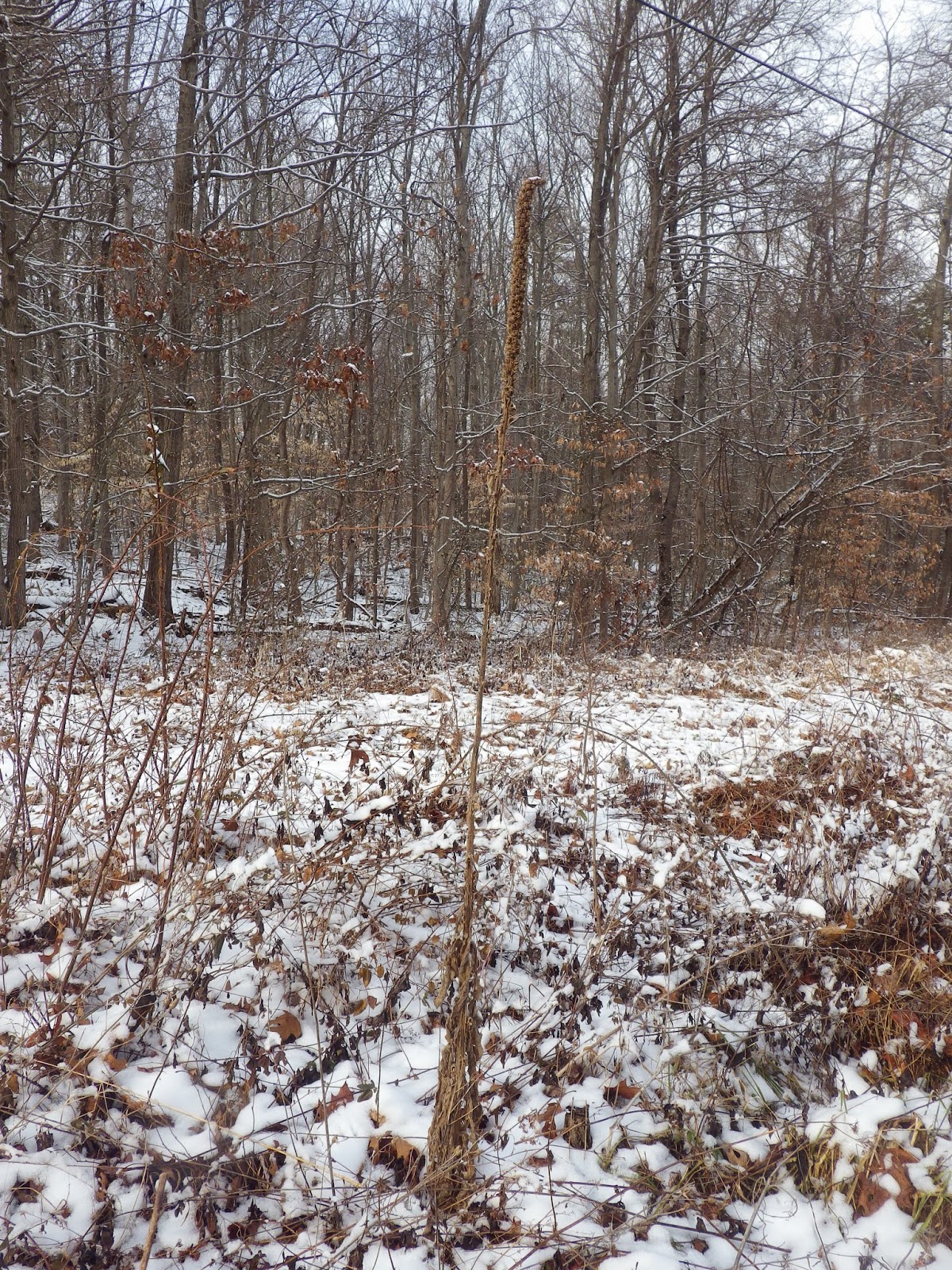
Mullein - Verbascum

Mullein - Verbascum

All of these plants were photographed on one walk beginning on higher ground and leading to a stream.
A plant's location can also help you with identification.  Do you know which of these were found near the stream?  and which would not want their feet wet?


Wild Basil - Satureja, Clinopodium, Calamintha

Wild Basil - Satureja, Clinopodium, Calamintha


Winter is a nice time to get to know a plant because you can see its bare bones, its skeleton, it's basic structure, and often its seed pods.  Pay attention to how it grows on the whole - its habit - and get down close with it and inspect the details.  Fascination awaits!


Alder - Alnus

Alder - Alnus


What new plants will you learn this year?  What plant allies are you working with this winter?


Shiso - Perilla

Shiso - Perilla

*Please get to know your plants well enough to know which ones should be harvested and use ethical harvesting practices if you do, never taking more than 10% unless it is a known common, plentiful, invasive and never harvesting at all if rare or endangered.  Also, know how to harvest so that you allow the plants to continue.  Spread their seed, refrain from using the roots if possible, and prune for good regrowth.

There will be more of these posts to come to help you with identification....

1.19.2015

Collage from the Archives

I am giving a talk tonight at Shenandoah Arts Council on Collage as a tool for healing 
and am giving monthly upcoming hands-on workshops on the same at Mountain Mystic Company
If you're local to the DC, MD, northern VA, and WV area and interested, 
check out this Facebook group for details.

Some of my collages from the archives for inspiration...
(technically they are mixed media assemblages; they are 3D)

Mindfield 2007


Tecknowledgy:  Take a Byte  2007


Fuel  2009


 Ants ended up invading the last one to eat the candy.  I loved this as it added so much to the concept I was attempting to capture, with the collage being about food.  It was interactive art with the ants crawling around and eating it.  Now the candy is long gone.  :)


~~~

1.10.2015

Making Soup Stock: Bone and Vegetable - Nutrition from Kitchen Scraps

Strained Bone Stock with added Shitake and Seaweed for Flavoring and Trace Minerals.


You know those bits that many just throw away (or even better compost) when cooking...broccoli stem peelings, onion skins, chicken bones,....  well if you aren't putting them to good use, now is the time to start.  What I do is keep a gallon ziploc bag or two of each in the freezer going at all times, one for bones, one for vegetable scraps.  Once the bag is full, or sometimes I'll wait for two bags to be full, I make soup stock.  Sometimes I mix the bones and vegetables, but ideally you decoct the bones for as much as 72 hours; the vegetables are best just 24 hours max, so it depends.  The vegetables are mostly just a flavoring agent, something to use as a base or liquid in most any cooking.


Straining the Broth.


The bones on the other hand are one of the most nutritious foods you can eat and I believe no diet should be without the regular intake of bone broth, but especially anyone healing from any type of trauma, dealing with serious illness, or pregnant.  When I eat bone stock I can feel the goodness going throughout my whole body lighting up every cell, literally.  It's power packed with nutrients (amino acids and minerals especially) that enrich your body and make you feel good.


The strained Bone Stock; you can see it has good fat in it too.


To make this glorious golden liquid you just immerse the bones in water after breaking them open to expose the marrow if needed.  For instance, with chicken bones you want to use a mallet to break each long bone.  You can also buy larger soup bones at your local humane butcher (if you don't have one of these, look for one - know your farmer, know your food).  I often do this and just mix whatever bones I have; I even mix in fish bones.  Next add a tablespoon or so of vinegar per gallon of water used; this helps to leach the minerals out of the bones.  You may need to add water as you go, particularly for the longer times, or you can start with a greater amount of water.  Bring all this to a boil, then reduce to simmer with a lid and cook for 24-72 hours.  The longer you cook it, the more minerals you will get out of the bones.  72 hour decocting actually makes the bones mushy like a cooked potato.  Once your cooking time is up, strain it; you do not need to skim the foam off the top (it's high in amino acids).  I then put the cooked bones in my compost pile; I figure the garden will use any minerals left.


In this Vegetable Stock; you can see a Brussel Sprout stalk, Leek ends, Onion peelings, Carrot tops, and  rubbery Celery.


Now what to do with all this rich, luxurious goodness?  I use bone stock as a base for most any type of soup, mixed into any type of vegetable mash, as a broth when cooking meat, and even cook the occasional pasta in it.  It gives any dish a depth of flavor and mouth feel that is hard to beat.  You can also use it as the liquid needed when reheating a dish, or when creating a dish that needs just a bit more liquid to get the texture just right, or in making sauces and marinades.  Keep it for up to a week in the fridge, or freeze it in the right size quantities for your needs.  I have found that it does not work to cook dry beans in (even soaked first); I am guessing the minerals affect the ability of the bean coating to break down because the beans never soften.  So, cook the beans first separately, then mix with the bone stock.


Bone Stock with some type of Bean or Lentil and Garden Greens is a favorite staple dish around here.


For vegetable stock, use the same directions, but keep cook time around 24 hours, no vinegar needed.  You can use it in much the same way as bone stock, though it is more as a flavoring agent.  A great way to make something out of what would be waste otherwise.  Have fun in the kitchen!

~~~


5.26.2013

Making Bone Stock


Lovely isn't it?  This is after cooking, during straining.

Why would you do this?  Because...

1.  It saves money; have you looked at the price of organic stock lately?  Mighty expensive when you can make it with just a little time on the stovetop.  Plus home-made stock tastes better and is more nutritious (less processed, less water).  Get nutrients in an assimilable form, cheaper than buying supplements!)

2. It'super nutritious:  Calcium, Magnesium, Phosphorus and other trace minerals; Glucosamine and Chondroitin and Gelatin- good for your bones, joints, hair, nails, skin, heart, and on and on...

3. It re-uses what would otherwise be a waste product.

This is what it looks like after cooking and straining.

How?
1. Collect bones as you get them in a ziploc bag in the freezer.  I mix all types of bones, literally from pork to chicken to fish (all humanely raised or sustainably wild-harvested, a prerequisite for me as factory farms are a true atrocity and serious ethical issue, on top of that, who wants to eat sick, tortured animals?  It matters.  We are what we eat.)

2.  Once you have a gallon bag full or so, use a hammer to break open any solid bones to expose the marrow and cover all the bones in a large stove pot (or crock pot) with water, add a couple tablespoons of Apple Cider Vinegar (this helps to leach out the minerals), and cook (bring to a boil, then simmer with lid) at least 24 hours, but as many as 72.  The longer you cook, the more nutrients you will get out of the bones.  72 hours makes the bones like mush.

3.  Strain and use.  You can fridge for up to a week, or freeze for longer storage.  Freeze in individual size portions, or use an ice cube tray.  You can use the stock for braising other meats, wilting vegetables, flavoring grains or legumes, making soup, reheating leftovers, etc.  I find a use for it almost daily.
Often I just make a huge pot of soup with it right after straining:

This is a soup to which I added right to the bone broth:  soaked and strained Aduki beans, Buckwheat Groats, Olive oil, Shitake, Kelp, Bay leaf, Thyme, Turmeric and Mizuna greens.

Mizuna, an Asian green from the coldframe

Greens Coldframe - with wild greens growing all around!

What?
Easy soup recipe guidelines (all measurements are approximate):
Add to gallon of bone stock:

- 1/4- 1/2 c. olive, coconut, sesame oil or saved oil from cooking fatty meats

- Kelp, small handful - I add this to all soups for it's salt, iodine, and other trace minerals.  Kelp helps to remove heavy metals from the body, so it's detoxing.

- 1 c. grains (cook in stock until done, different for each grain, can soak first overnight to initiate sprouting and improve nutrition)

- 2 c. dry legumes (**soak, strain, and cook them separately first.  There are so many beans and lentils
to choose from - lots of colors and flavors!  Soak  legumes 1-3 days before cooking with a rinse daily; this helps you to digest the beans, getting much more protein out of them, getting rid of the anti-nutrients that coat the beans so that you get more nutrition from the beans)
You can't go wrong with sauteed onions. 

- Greens of some sort:  bok choy, spinach, collards, etc.

- other vegetables and flavoring agents

- a dash of a couple spices (mix and match, experiment!)  I almost always add Turmeric for its anti-inflammatory effect.


Eat as soon as the ingredients are cooked, but simmer as long as you like.  Sometimes I leave this on the stove all day.  Then cool and put some in the fridge for sooner and some in the freezer for later.

These soups are so nourishing you can feel it; they make you feel good.

Another option is to mix vegetable scraps into the bone stock for making vegetable stock, or just use vegetables alone.  Vegetables only need an all-day or overnight (24 hour max) cooking time, so if I am mixing, I will usually cook the bone stock for a day or two first, then add the vegetable scraps.  By vegetable scraps I mean the peelings from carrots, the skin on the broccoli stem, the fibrous ends of the asparagus, onion skins, leaves off cauliflower, etc. - the parts that you usually compost, but are technically edible.  I save all this in a separate ziploc in the freezer.  I just keep re-using the bags, always keeping them in the freezer whether full or not.  Simple.  Keep in mind not to use tomato, pepper, or potato green parts as they are toxic.


Jujube dates
Another option is to mix herbs into your stock at the end of cooking time for their therapeutic effects.  Some possibilities include:
Astragalus, Jujube, Goji berries, Dong Quai, Codonopsis, Poria, Burdock root, Reishi, Dioscorea, He Shou Wu, Orange peel,
Lotus seed, and Lily bulb.
Go light at first so as to not overpower the flavor, and up the amount slowly. 


Soup-making:  a weekly ritual.  Warms the belly and the soul.